Vein Under the Leaf
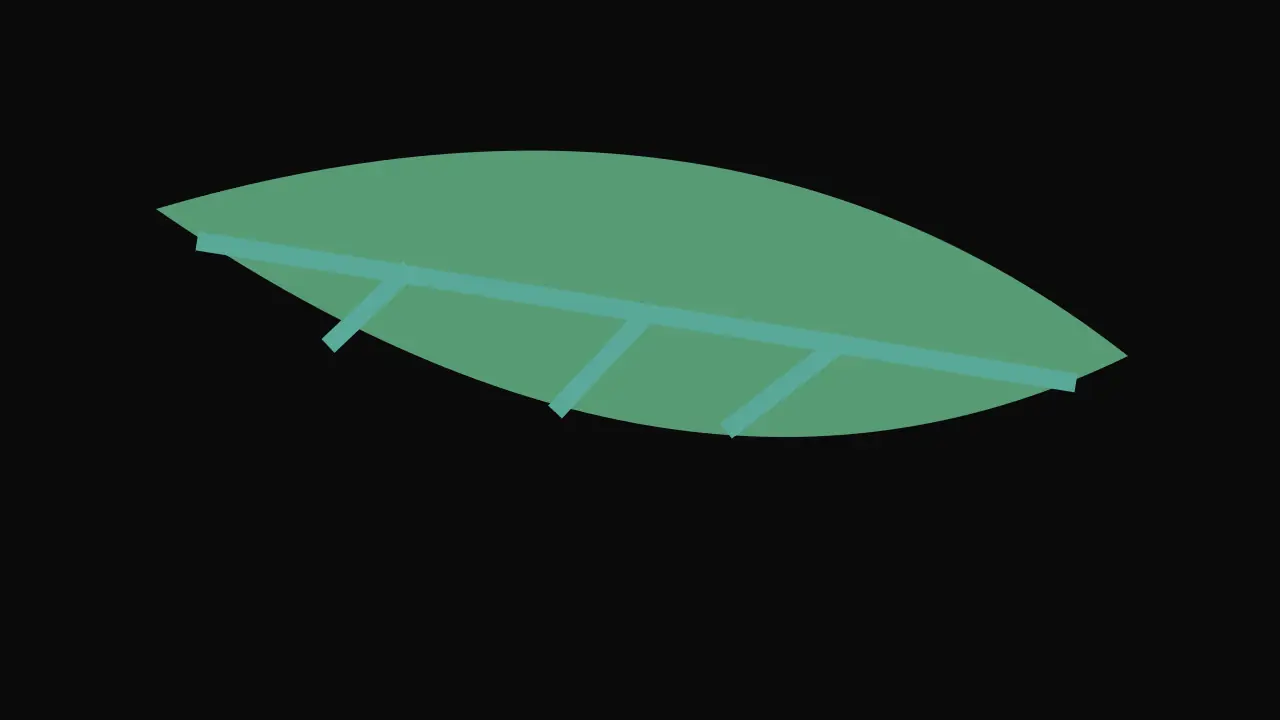
The first fallen leaf was a broad walkway from the bank to a place where the moss began again. The scout could see the dark hollow through a tear in its surface. Beneath the leaf we had drawn several raised veins that cast interesting shadows. None of them helped the scout return. The route was a single line made complicated by the water on top. We gave one vein a small connection back to the root.
Connect the raised vein to a place you already know
The root is the first narrow path into the bank. Starting beside it, you can see where the leaf’s near corner rises away from the ground. A vein extends along the underside and meets the root at a lower point. We made the two surfaces visibly distinct while preserving an approach a scout can cross. The branch of the vein closest to the root stays recognizable from the first view into the hollow.
In the old scene the best way to notice the vein was to look straight up through the tear. That happened near the middle of the bridge, past the first place a scout could have used it to return. We shifted part of the torn edge toward the bank and put a small dark space between the two surfaces. The gap can be inspected from a safe bit of moss before the top of the leaf becomes relevant.
Show exactly which part can support a return
We widened the near end of the vein and kept the rest of its branches narrow. A scout can step beside the rounded part and follow it without climbing into the wet tear. The line remains a feature of the leaf. An early art pass put a pale stripe over it that read like a painted path. We removed that overlay and kept the softer side of the leaf visible, with a darker shadow wherever the vein stands away from the surface.
The scene also needs a clear space to turn after reaching the near edge. Looking back at the root can show how the route connects. From higher up, the scout sees that the wet top surface slopes toward the same corner. If a drop moves, the underside can remain available. A traveler can choose to go lower and inspect what has changed without losing their reference to the bank.
Reopen the same view after something shifts
The vein lives beneath a leaf that can bend. The exact height of the opening might change, but the connection from the root should still be recognizable. On a later frame we test the small movement beside the wet edge. The vein can approach the ground more closely while preserving at least one surface the scout can use. The dry branch retains its curve, so the player can compare the current position to the one they remembered.
Our review begins with the scout on the moss. A reader points to the spot where they would turn back if the near corner became blocked. Then they start across the higher surface and descend near the first tear. At the end they should be able to return to the root using a path they already saw. The earlier view ought to provide a practical answer.
Connect the two useful heights
The Leaf Span preserves both the upper route and its lower edge. After the First Drop describes why a change in the wet part cannot be allowed to hide every approach. The vein helps a scout inspect one part of the hollow before making another move. A direct return from that point makes the leaf more interesting than a narrow bridge with only one way on and off.