The Reed Line
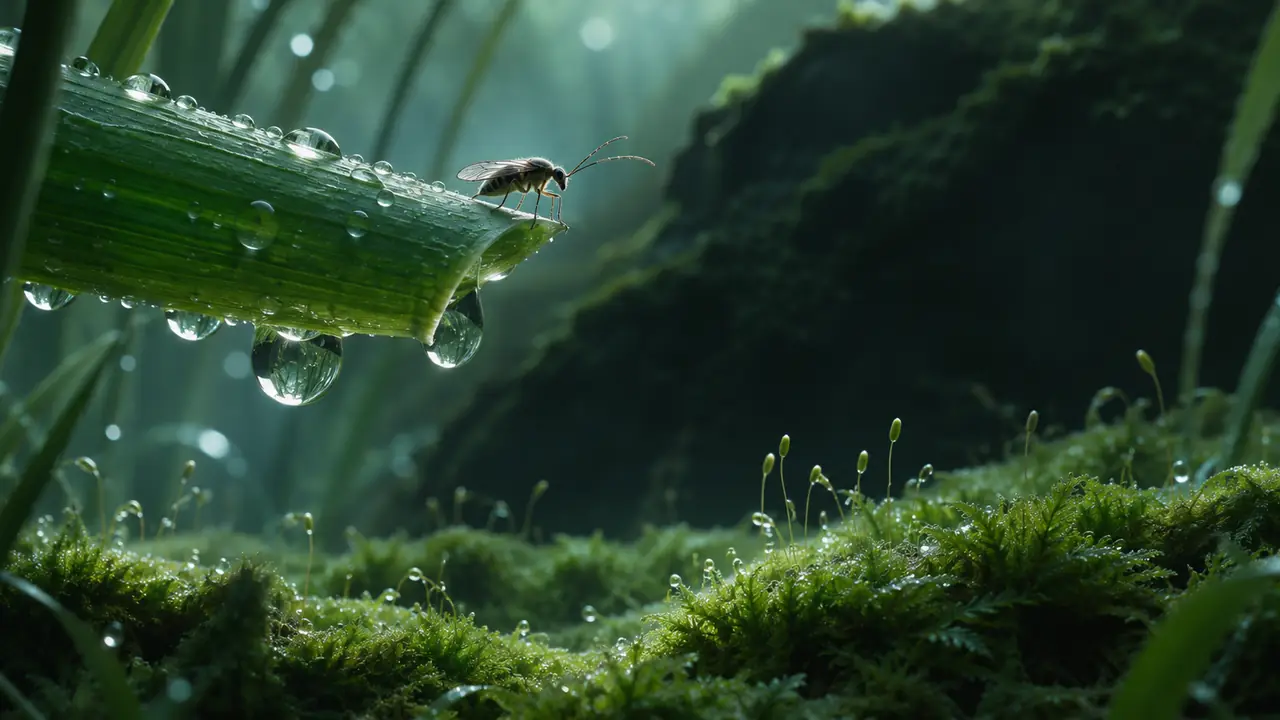
The Reed Line begins in moss under the pale side of a tall reed. Large drops hang where the stem has gathered water. They appear to sit beside each other from the ground. When the scout climbs onto a raised fiber, one looks much closer and the other lies on the far side of the stem. To get above them the scout needs a place to rest and compare which side remains clear.
Circle the stem from a stable height
The loop takes the scout from moss to a low collar that circles most of the reed. They can stop there while turning to inspect the edge. A gap in the collar appears near the largest drop. The next climb is possible from a dry boardlike fiber above that opening. A different side has a wider surface and several wet patches in a row. The first few views help the scout decide which obstacle is actually close to the path.
If a player moves above the collar too quickly, the near drop can look like an obstacle across the whole stem. A lower view reveals a gap around its far side, where its shape lifts away from the usable fiber. Returning to the collar lets the scout test a smaller move and compare how that gap changes. A second look helps determine where the edge will be after the next turn.
Draw depth using more than reflected color
Near shadows use black and a muted green. The upper reed carries a soft turquoise reflection from one wet surface. At ground level there is a pale line along the fiber next to the usable grip. As the scout circles the stem, that line becomes narrower and shows which part projects from the reed. We keep it readable against reflected sky instead of giving every possible route the same color.
The close scene uses quiet leaf sounds and a faint change when water moves along a surface. We want somebody to notice the changing gap while looking at the same stem, not to mistake a bright drop for another island in space. The lower collar and high fiber retain shapes you can recognise from both sides. The outline remains a useful reference when the background appears out of focus.
Compare the shelter after you gain one level
The first dry place above the collar looks sheltered from a distance. A drop on the far side can move past it after a brief shift in the stem. The scout can stop well before that movement and use the lower view to compare where it will go. If they need to turn back, the earlier dry collar remains available. The prototype keeps an insect-scale failure small enough that looking again is a reasonable response.
The Reed Line is in prototype development. The current scene tests the collar, a nearby gap and a short climb. Collar at Stem Height records a place to pause. When Two Drops Look Like One uses a turn to make the separate obstacles legible. Follow the stem level study from the overview to compare the two scale changes in the projects.